← Exhibitions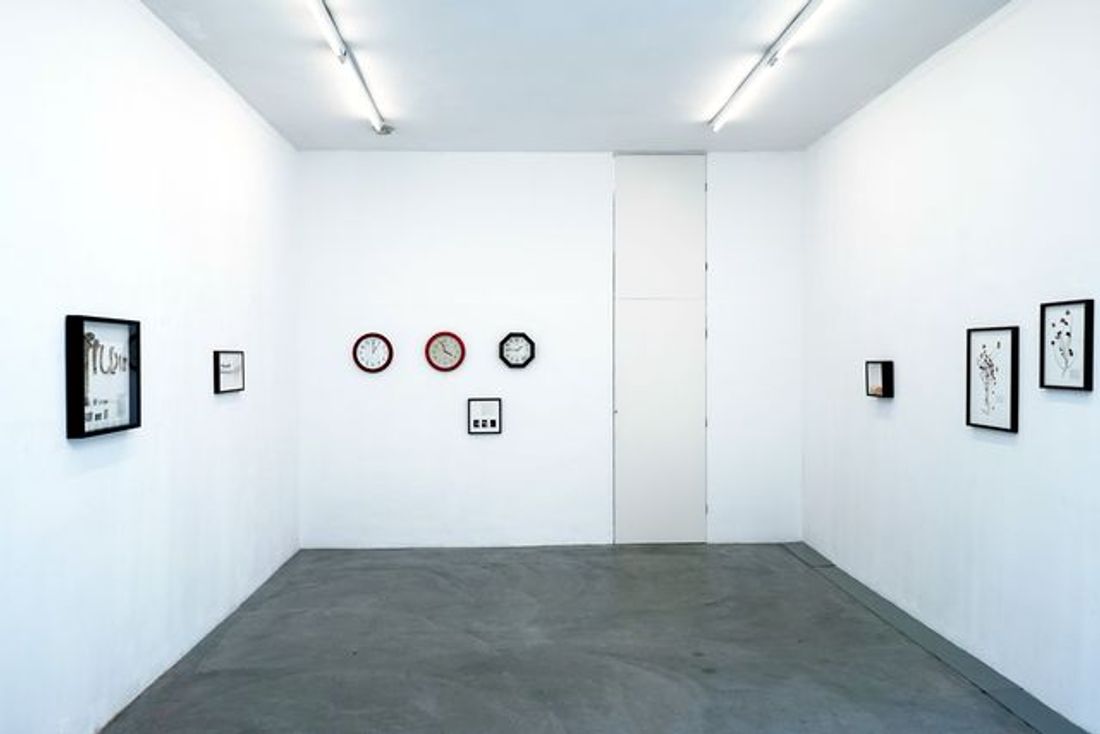
14 April – 27 May 2018
The Worst Is Yet To Come: relics from a distant past
About the exhibition
The
Worst Is Yet To Come:
relics from a recent past (clock doesn't say 3:46 pm),
a solo exhibition by TINKEBELL. Over
the past twenty years TINKEBELL. has made it her personal mission to
save the world. To achieve this goal, she initiated diverse and
frequently controversial projects, all over the world, not often left
undiscussed by the media. The physical remainings of these activities
she turned into art objects, called 'relics'. They go from old
personal documents, photos, the packages of painkillers
she took after her sterilisation, the human bones she brought back
from the ground of the collapsed textile factories 'Rana Plaza'
(Bangladesh) till clocks (that doesn't say 3:46 pm) and the plants
she picked in the affected zones of Fukushima and much more. In this
exhibition, a selection of these relics is shown to the public.
The
word 'relic' comes from the Latin 'reliquiae', meaning 'remains'.
Traditionally the word is used for objects or personal remains of a
religious person, preserved as a tangible memorial. While TINKEBELL.
is not religious, what she does believes in, is the truth. When the
facts seem to be untold, or desperately are tried to keep disguised,
this is when TINKEBELL. comes in. You could say these relics are
reminders of every time she tries to address a truth to our world.
Usually with success.
If you are already familiar with the
work of the infamous TINKEBELL., some of the relics will be
recognizable and bring to mind her projects in the (recent) past.
Others have never been on view before and were selected especially
for this occasion. Of course, the objects itself cannot be made,
but the form in which it is presented and preserved can. An example
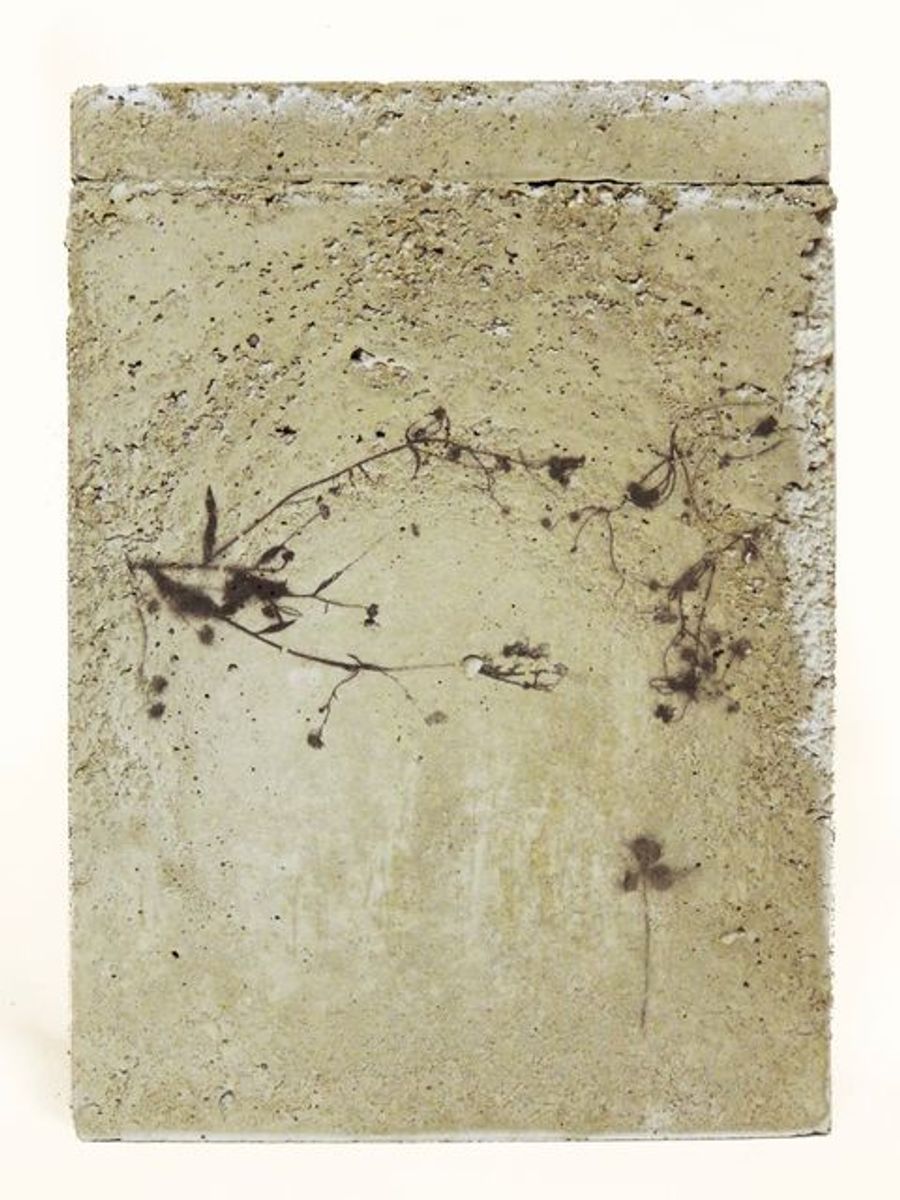
is the plants that she picked in the red zone of Fukushima. This is
the area with the highest level of radiation and was decontaminated
by the Japanese government since 2011, directly after the collapse of
the nuclear power stations. To present the plants with the highest
radioactive levels, she cast boxes of concrete. This makes them
completely safe, though she discovered during her trip that the
plants in itself are not that dangerous after all.
When
TINKEBELL. was invited to visit Fukushima, she found out that most of
the stories she heard there were untrue. She decided to go back and
spend in total seven weeks in the affected zones, spread over two
years. All here findings can be read in here recently published book
Het
gevaar van angst – Hypochonderen in Fukushima
(Dangers of fear – Hypochondria in Fukushima). Published by Atlas
Contact and signed versions available during the show.
To
provide a context, with every relic there is a short story next to
it, explaining the project (or the situation) it is remaining.
Altogether these relics give an insight into the sometimes
astonishing and bizarre, but more often incredible life and career of
TINKEBELL.
Artist

Art / Images in ‘The Worst Is Yet To Come: relics from a distant past’
TINKEBELL.
Something Pretty That Can Do No Harm 3
Flower Collage In A Box Of Concrete With Aceton Print
Artwork information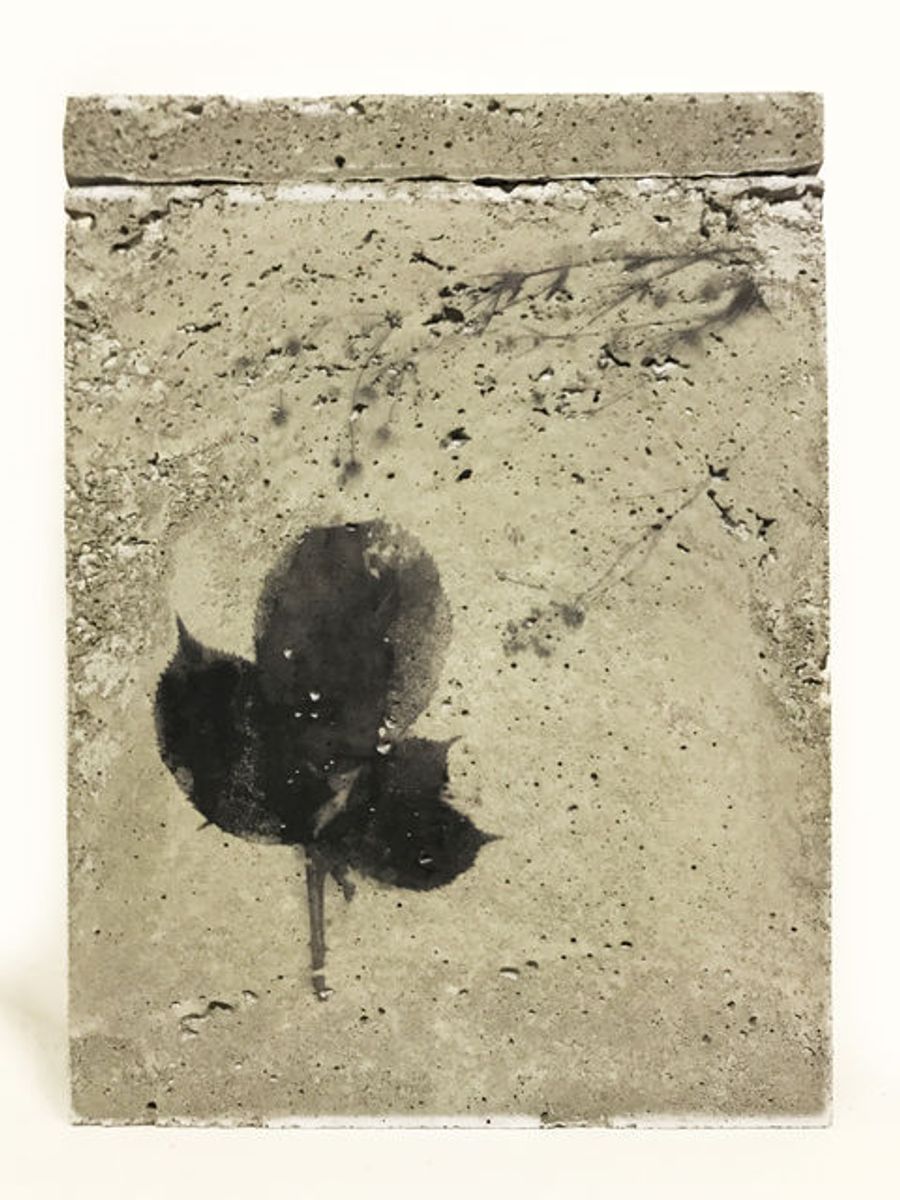
TINKEBELL.
Something Pretty That Can Do No Harm 1
Flower collage in a box of concrete with aceton print
Artwork information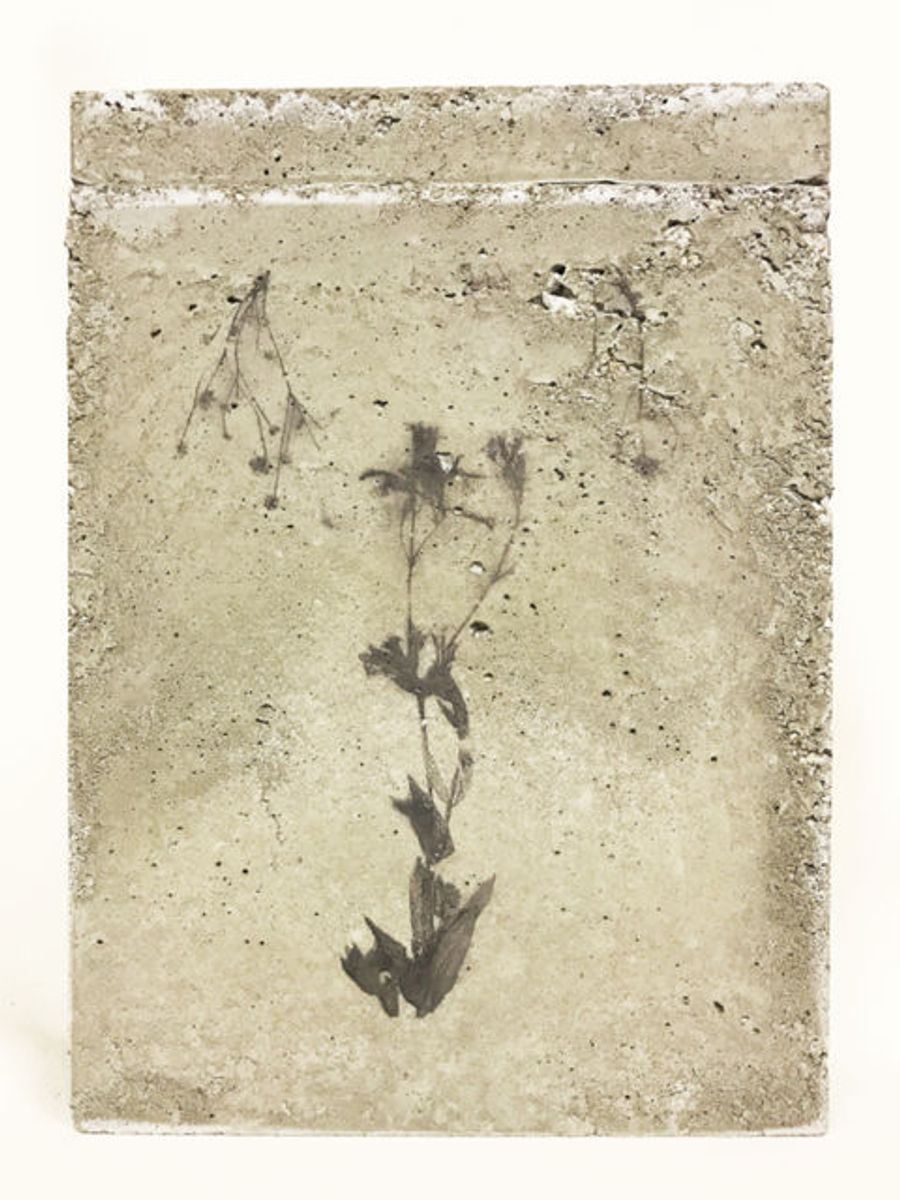
TINKEBELL.
Something Pretty That Can Do No Harm 2
Flower collage in a box of concrete with aceton print
Artwork informationInstallation views


